Why Vacuuming Isn't Enough: What's Deep Inside Your Living Room Rug
An area rug can hold its own weight in trapped soil before it looks dirty. Here's what's actually living in the foundation of the rug under your coffee table.
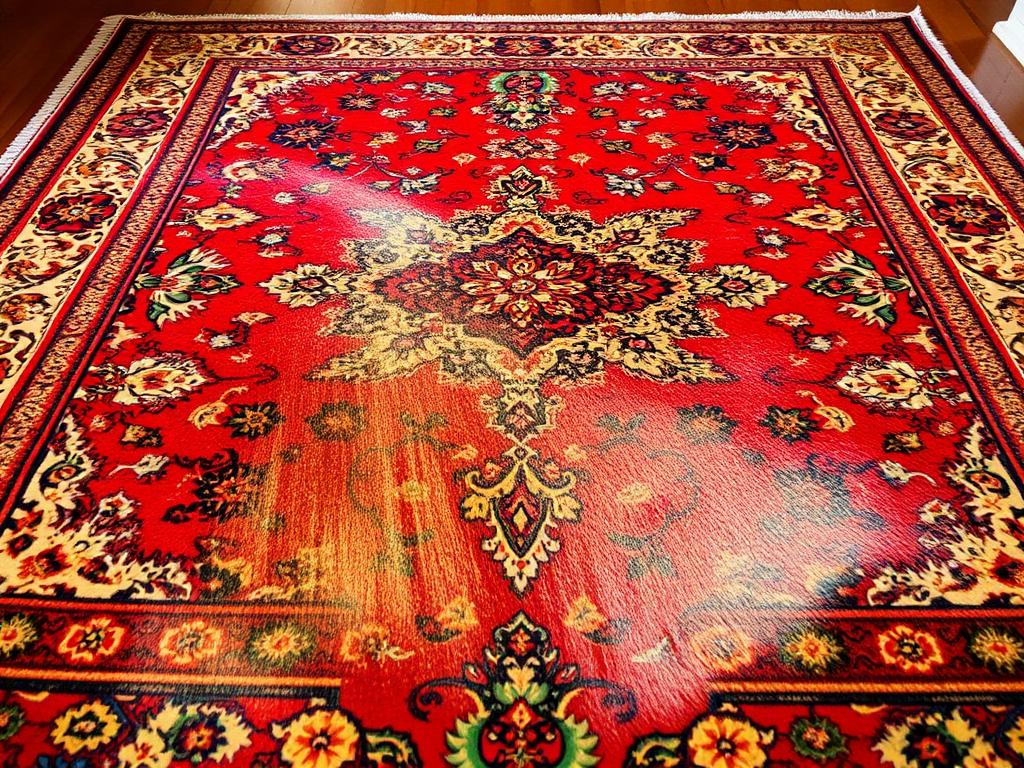
The pounds-per-square-foot reality
Industry testing consistently shows that a typical area rug in a household setting can hold a full pound of dry particulate soil per ten square feet without visible signs of being dirty. On a 9-by-12 living room rug, that's roughly ten pounds of trapped grit, skin cells, pet dander, pollen, and food particles — quietly accumulating in the foundation.
Vacuuming the top of the rug touches only the upper third of the pile. The remaining two-thirds — the part closest to the foundation — is where the bulk of that soil sits. No household vacuum, however powerful, can mechanically remove it.
What that soil is actually made of
About 80% of household dust by mass is composed of dead human skin cells, textile fibers, and outside soil tracked in on shoes. The remainder includes pet dander, pollen, mold spores, dust-mite remains, food particles, and an array of chemical residues from cleaning products, cooking, and personal care.
Dust mites feed on the skin-cell component, and their fecal proteins are one of the leading household triggers for asthma, eczema, and chronic congestion — even in people who don't think of themselves as allergic. Rugs in main living areas are a primary reservoir for that biological load.
Why grit matters more than dust
The most damaging component of trapped soil isn't biological — it's mineral. Sand, silica, and microscopic grit migrate to the base of the rug pile and act as a permanent abrasive every time someone walks across the surface. Every step grinds those particles against the wool or synthetic fibers from below, cutting them progressively shorter.
This is why traffic lanes develop in older area rugs even when they're vacuumed regularly. The pile isn't dirty — it's been physically cut down by the grit you couldn't see.
What humidity does to all of it
Orange County's marine climate keeps indoor humidity elevated for much of the year. Humidity reactivates the soluble portion of trapped soil — sugars, body oils, urine salts in pet households, and protein residues — causing them to redistribute through the rug and bond more aggressively to the fiber.
If your rug develops a faint musty smell on humid days, that's the active biological zone in the foundation announcing itself. It's the strongest possible signal that professional deep cleaning is overdue.
What proper rug cleaning actually removes
Workshop-quality rug cleaning starts with mechanical dusting — a process that vibrates the rug to release the trapped grit at the foundation before any water touches it. On a typical living room rug, the dusting alone often recovers several pounds of dry soil that no vacuum could have touched.
From there, controlled-temperature water, neutral-pH chemistry, and hand-finished extraction lift the remaining biological and organic load. The rug returns visibly brighter, lighter to lift, and noticeably odor-free — not because it was 'dirty' on the surface, but because the foundation has finally been cleared.
How often is the right interval
For rugs in main living areas, every 12 to 18 months is the right professional cleaning cadence. Bedrooms and low-traffic rooms can stretch to two years. Pet households should lean toward the shorter end regardless of placement.
We offer pickup-and-delivery workshop cleaning for area rugs throughout Orange County. Same-week scheduling, transparent pricing, and a full inspection report before the rug returns to your home. Call 949-393-5323 to arrange pickup.