How to Safely Clean Food and Drink Spills on Delicate Furniture Fabrics
Red wine on a linen sofa. Coffee on a velvet chair. The first sixty seconds determine whether it becomes a memory or a permanent reminder. Here's the safe-for-delicate-fabric playbook.
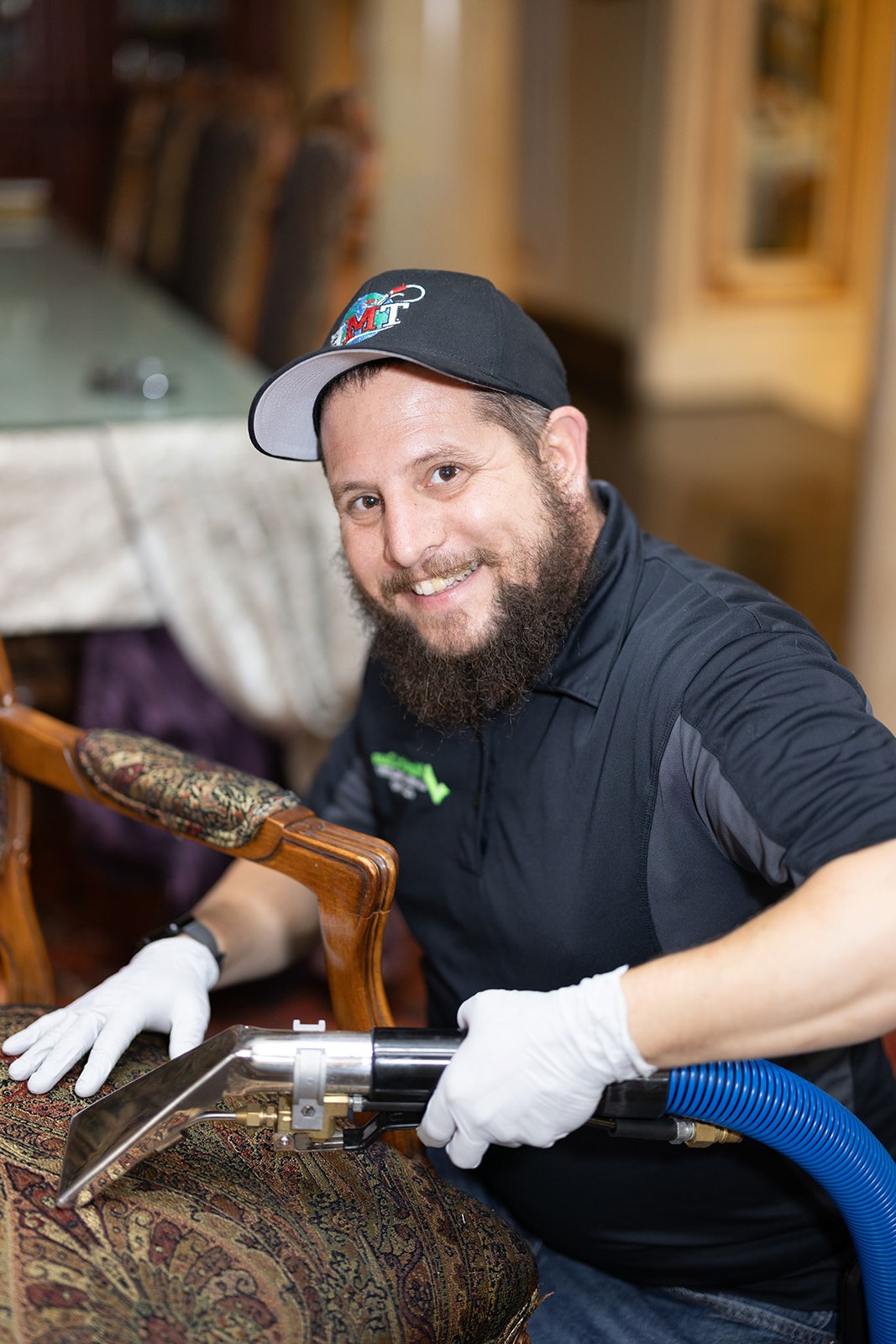
The first sixty seconds matter most
Liquid behaves predictably: it absorbs as long as the fabric can take it. Stop the absorption fast and you keep the contamination on the surface where it can still be lifted. Wait, and it migrates into the cushion core where it becomes a permanent watermark or color shift.
Get a clean, dry, white absorbent towel onto the spill within sixty seconds. Press straight down with firm pressure — do not rub. The goal is to pull liquid out of the fabric, not push it sideways into adjacent fibers.
Red wine and dark juices
After initial blotting, lightly mist the area with cold water and continue blotting outward from the perimeter. Cold water dilutes the pigment; warm water sets it. Keep alternating mist and blot until the towel comes away mostly clean.
Skip the salt and club soda folklore — both can leave residues that complicate later professional cleaning. If the stain still ghosts after fifteen minutes of patient blotting, stop and call a professional. Aggressive home treatment on a delicate fabric almost always makes it worse.
Coffee, tea, and tannin stains
Tannins bond chemically to fiber within minutes. Blot the surface immediately, then lightly mist with cold water — never hot — and keep blotting. A single drop of clear dish soap added to the water can help on synthetic fabrics, but always test in an inconspicuous spot first.
On velvet and silk blends, water alone is the safest approach. The pile structure of velvet is easily damaged by aggressive scrubbing, and silk is highly sensitive to alkaline cleaners. When in doubt, blot, then call.
Grease, oil, and butter
Oil-based spills cannot be lifted with water — water pushes them deeper. Sprinkle the spot generously with cornstarch or baking soda, let it sit for fifteen to twenty minutes to absorb the oil, then vacuum thoroughly. Repeat if a shadow remains.
On code-S (solvent-only) fabrics, a dry-cleaning solvent dabbed gently on a white cloth is the appropriate next step. Never apply solvent directly to the fabric — only via the cloth. Ventilate the room.
Tomato sauce, berries, and pigmented food
Scrape off any solid material with the back of a spoon — never the edge of a knife, which can fray fibers. Blot with cold water and a touch of dish soap. Patience matters here: lift in layers rather than scrubbing in one aggressive attempt.
Lycopene (the red pigment in tomato) and anthocyanins (in berries) are notoriously persistent. If the stain ghosts after careful treatment, professional enzyme treatment is the next step — and it's usually fully effective if booked within a week.
When to stop and call
If the fabric tag says X or S, if the stain spans more than three inches, if it's on silk, velvet, or hand-loomed material, or if you can already see a watermark forming after gentle blotting — stop. Continued home treatment past that point typically guarantees the permanent stain you're trying to prevent.
We handle emergency upholstery cleaning calls across Orange County and can usually get a senior technician on site within 24 hours. Same-day response when scheduling allows. Call 949-393-5323.